Google Ads is the fastest, most predictable way for home improvement contractors to put their business in front of homeowners at the exact moment they're ready to hire. Not "brand awareness." Not "impressions." Homeowners typing "kitchen remodeling contractor near me" or "window replacement company" into Google right now, wallet already half open.
This is the complete 2026 guide to running Google Ads (also called PPC, or pay-per-click) for a home improvement business — kitchen, bathroom, windows, roofing, decks, whatever you build. The specifics of each niche differ, but the engine underneath is identical. Get this engine right and you can turn ad spend into booked jobs on demand. Get it wrong and you'll donate your budget to Google and swear off ads forever.
Let's build it right.
Why Google Ads is the fastest lead channel for home improvement contractors
Most lead channels make you wait. SEO takes six months to a year. Referrals trickle in on their own schedule. Facebook Ads work, but you're interrupting people who weren't thinking about their bathroom — you have to create the demand.
Google Ads is different because the demand already exists. Every day, homeowners in your service area search for exactly what you do. Google Ads lets you skip the line and land at the top of that search the day you launch.
Here's why that matters so much for home improvement specifically:
That combination — high intent, high ticket, fast cycle, on-demand control — is why paid search is the backbone of nearly every predictable contractor lead pipeline we build.
Google Ads, PPC, or Facebook Ads — what actually fits contractors?
First, let's clear up the words, because homeowners and contractors use them interchangeably and it causes confusion.
"Google Ads" and "PPC" are the same thing.
PPC just means pay-per-click — you pay only when someone clicks your ad. Google Ads is the biggest PPC platform, so when contractors search "PPC ads for kitchen remodel company" or "kitchen remodeling PPC," they're looking for exactly what this guide covers. Same engine, different name.
Facebook Ads are a different tool for a different job.
The simplest way to think about it:
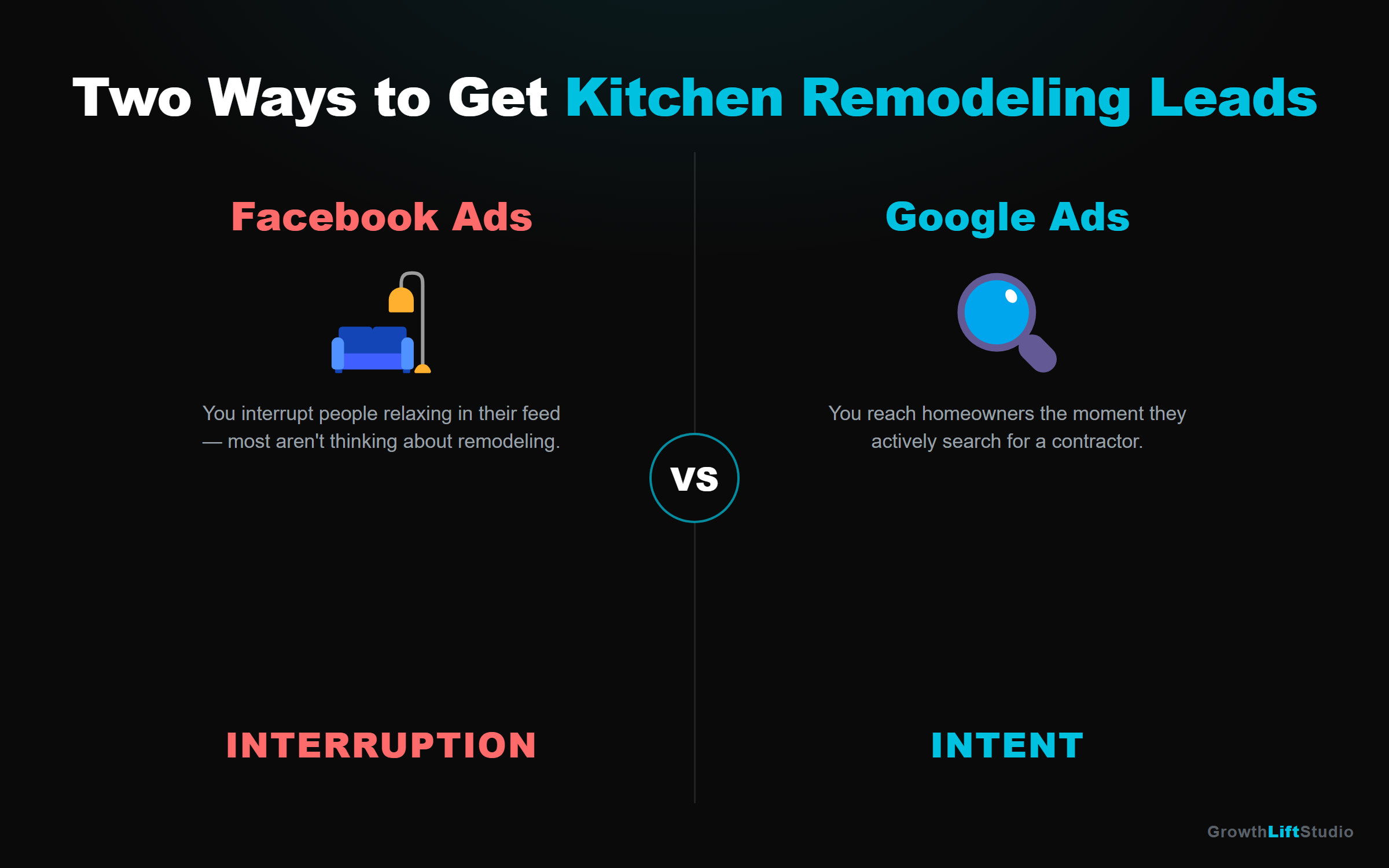
Neither is "better." They do different jobs. But if you only have the budget or bandwidth to run one channel, and you sell a high-ticket service homeowners actively search for, start with Google Ads. You're capturing demand that already exists instead of trying to manufacture it. Once your Google campaigns are profitable and consistent, layer Facebook on top to fill the funnel above them.
The rest of this guide is about doing Google Ads right.
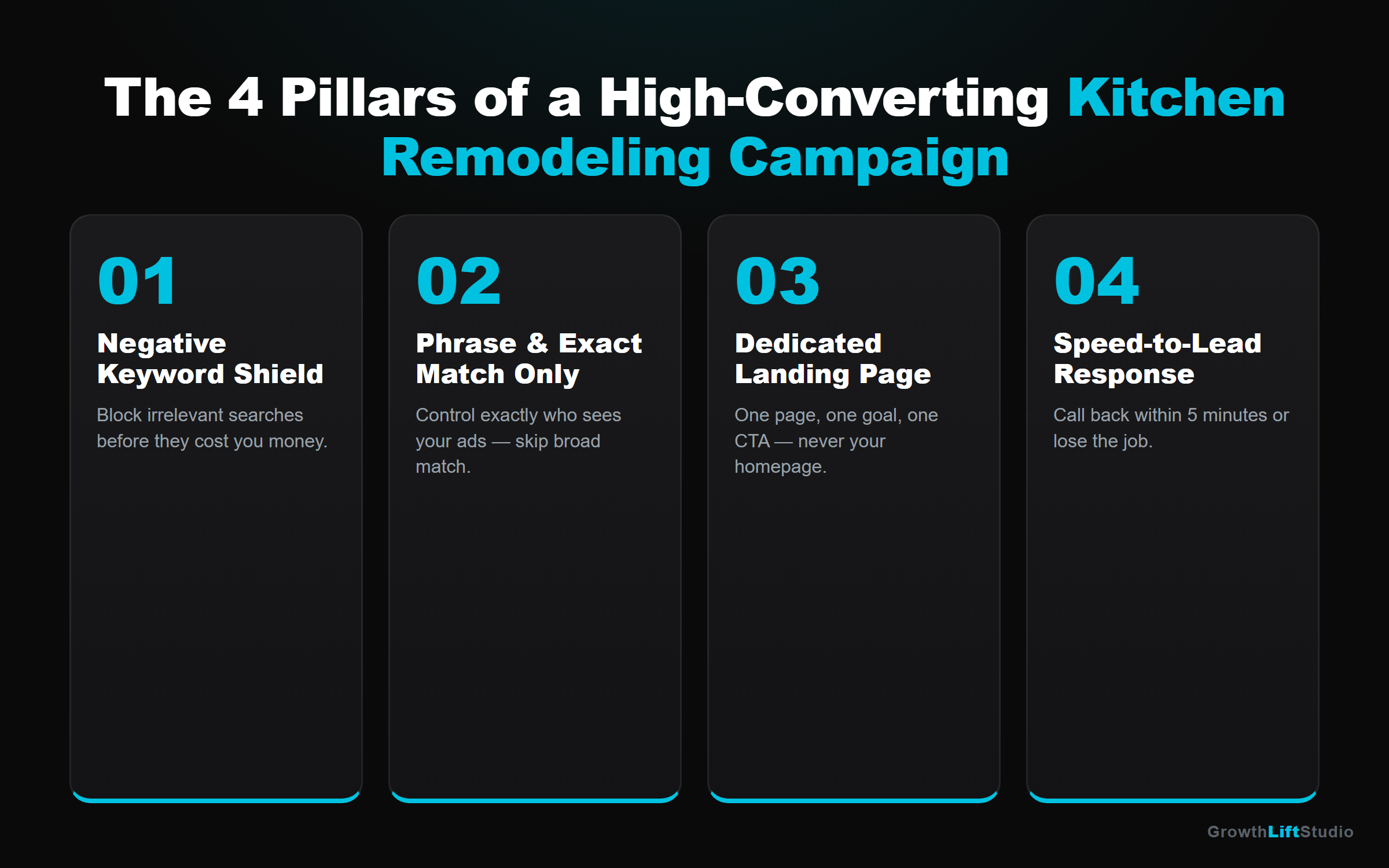
The 4 fundamentals every contractor campaign needs
Ninety percent of wasted ad spend comes from getting these four things wrong. Nail them and you're ahead of most contractors in your market — including the ones spending more than you.
1. Match the campaign to buyer intent
Bid on keywords that signal someone is ready to hire, not just researching. Terms with "contractor," "company," "near me," "installation," "estimate," or "quote" plus your city are gold. Broad, generic terms like "kitchen ideas," "bathroom inspiration," or "how much does a remodel cost" attract DIYers and window-shoppers who click your ad and never call.
Use phrase match and exact match only for your first 60 days. Broad match hands Google permission to show your ad for anything vaguely related, and it will bleed your budget before you have the data to control it.
2. Structure the campaign so you can read the data
Run one focused Search campaign per service, split into tightly themed ad groups (high-intent service terms, project-specific terms, and estimate/quote terms). Write a separate ad for each group so the headline matches what the person typed. Someone searching "walk-in shower installation" should see an ad about walk-in showers — not a generic "we remodel bathrooms" headline. Message match is the difference between a 4% and a 12% conversion rate.
3. Build the negative keyword shield before you spend a dollar
This is where 80% of wasted budget hides. Google will happily show your "kitchen remodeling" ad for "kitchen remodeling jobs," "DIY kitchen cabinets," "cheap kitchen countertops," and "kitchen remodeling software." A negative keyword list tells Google not to. Add these before launch, then review your Search Terms report every single week for the first 60 days and add more:
This one habit alone cuts wasted spend by 25–35%.
4. Send traffic to a dedicated landing page — never your homepage
Your homepage has ten things to click. A homeowner arriving from an ad gets overwhelmed and leaves. Every campaign needs its own page built for one job: capturing the lead. That means a headline matching your ad, real before/after photos of your actual work, one specific customer review visible without scrolling, a single clear call to action, and a sub-2-second load on mobile (over 60% of these searches happen on phones).
And once the lead comes in — call within 5 minutes. Home improvement homeowners contact 3–5 companies. The first to call back usually wins the appointment, full stop.
Free Strategy Call
Running ads without a system is just burning money.
We build Google Ads campaigns exclusively for home improvement contractors. Book a free call — no pitch, just clarity.
Realistic budgets and ROI by job value
Let's talk real 2026 numbers — not the "$15 leads" fantasy you'll see in marketing blogs. Costs vary by niche and market, but here are honest ranges:
Cost per click (CPC): $6–$22
Bathroom and window terms run cheaper; kitchen and major-metro terms run higher.
Cost per lead (CPL): $80–$300
Landing page quality is the single biggest variable — a dedicated page beats homepage traffic 2–3x.
Minimum viable monthly budget: $1,500–$2,000
Below that, the campaign can't gather enough data to optimize. Commit to at least 60 days before judging it — don't pull the plug at day 14 during the learning phase.
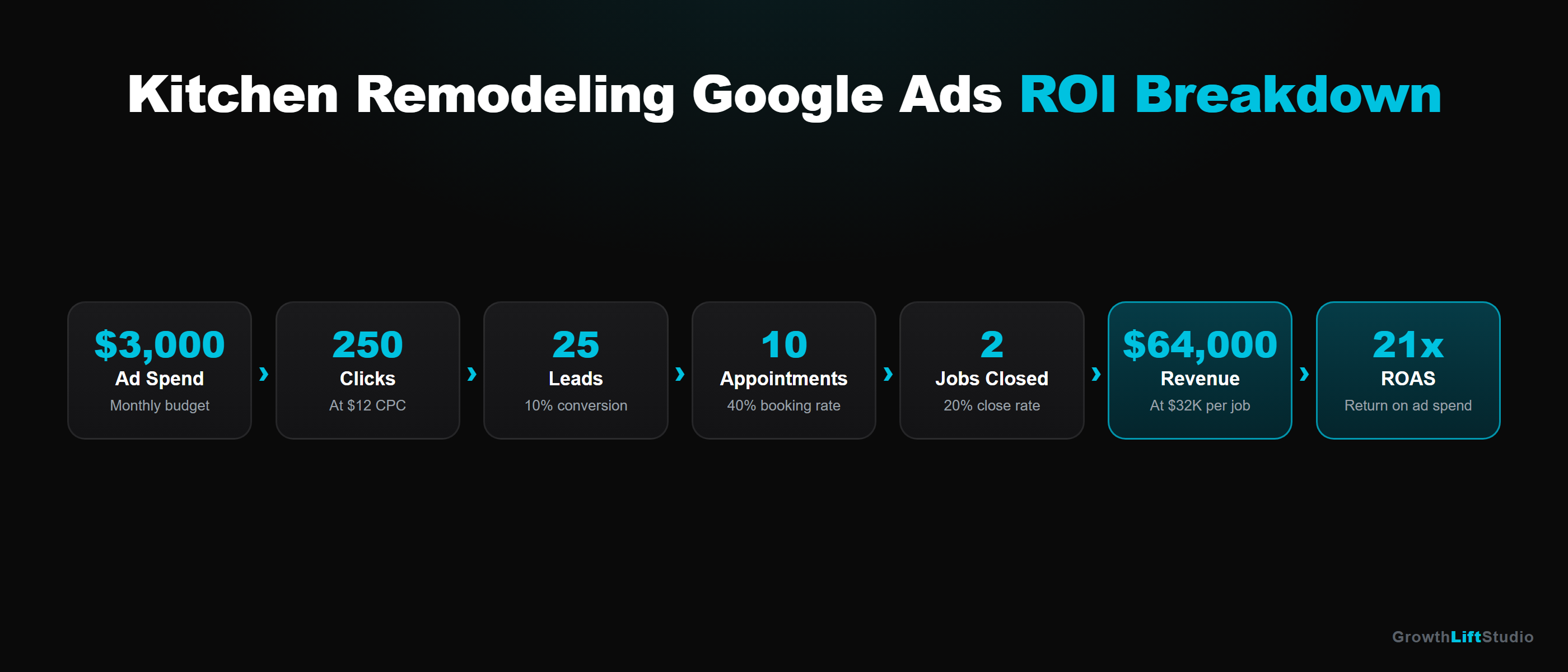
Here's the math that makes it a no-brainer. Say you spend $2,000/month at a $150 cost per lead — that's about 13 leads. Book 1 in 3 into an estimate (roughly 4 appointments), then close half (2 jobs). On an average $18,000 project, that's $36,000 in signed contracts from $2,000 in spend — an 18x return. Even in a rough month where you close just one job, you've turned $2,000 into $18,000.
That's why the only number that actually matters is cost per booked job — not cost per click, or even cost per lead. A $280 lead that becomes a $20,000 contract is cheap. A $60 lead that never answers the phone is expensive.
Pick your service: the per-niche playbook
The fundamentals above are universal, but each niche has its own quirks — seasonality, job values, keyword language, and the specific mistakes that drain budgets. We've written a detailed, no-fluff Google Ads guide for each of the core home improvement trades. Start with yours:
Kitchen remodeling
The highest-ticket, most competitive niche — which means the negative keyword shield and match types matter most here. Full breakdown of keywords, budgets, and the four pillars: Google Ads for Kitchen Remodeling Contractors.
Bathroom remodeling
Lower job values than kitchens mean tighter margins and zero room for wasted spend. Here's the structure that delivers $150–$250 leads and a cost per booked job under $1,000: Google Ads for Bathroom Remodeling Contractors.
Window replacement
Brutally seasonal and fast-closing — timing your budget to the fall and tax-refund peaks is the biggest lever. Here's the season-by-season plan: Google Ads for Window Replacement Contractors.
Prefer Facebook, or want to run both?
For bathroom remodelers specifically, here's how to make Facebook Ads produce qualified leads at $50–$150 each: Facebook Ads for Bathroom Remodeling Contractors.
Roofing, siding, decks, HVAC, and general remodeling all follow the same four fundamentals — if you run one of those and want a plan built for your exact trade, that's a five-minute conversation.
The 5 mistakes that burn contractor ad budgets
Even contractors who set up a technically fine campaign lose money to these. Avoid all five:
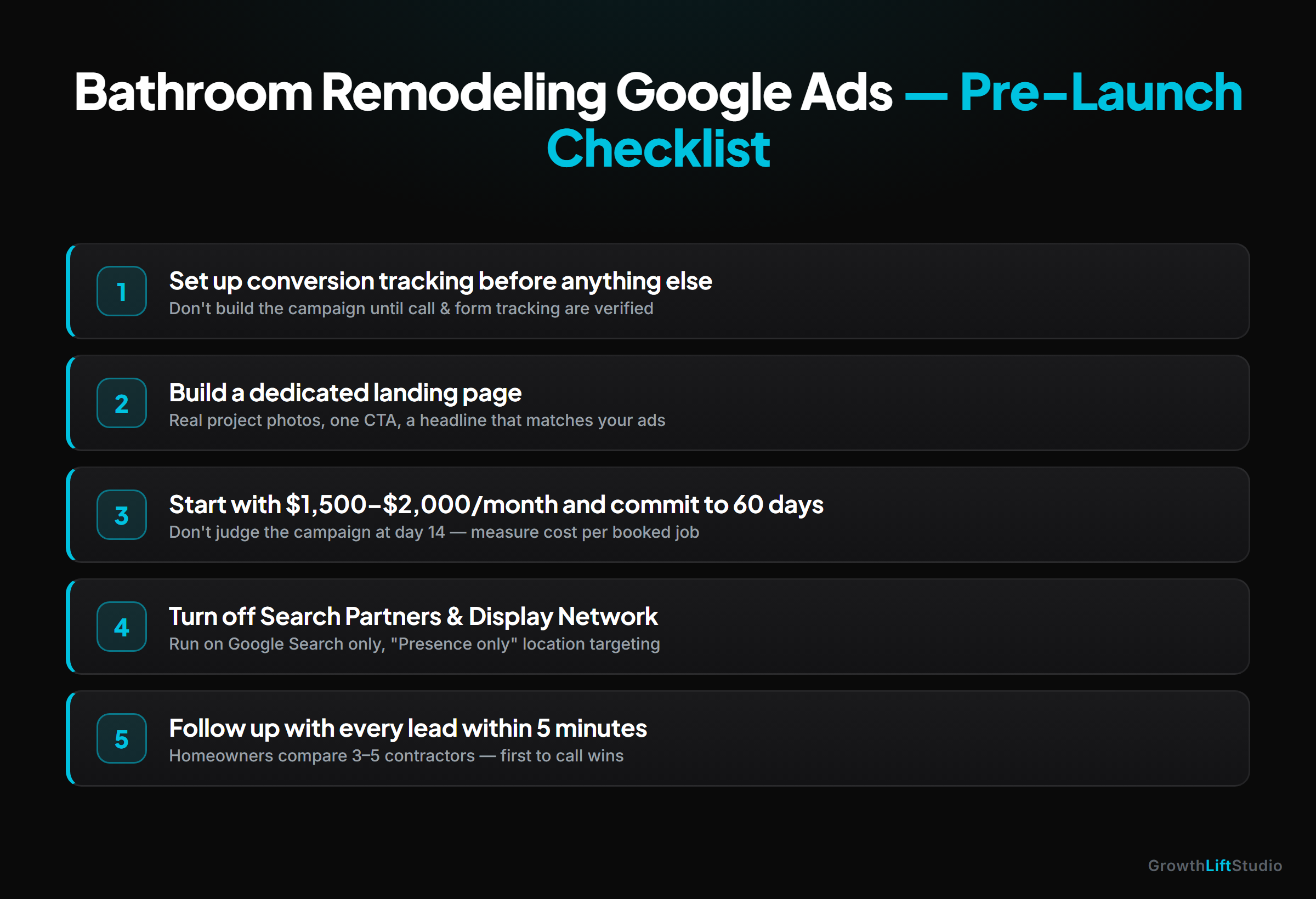
1. Leaving Search Partners and the Display Network on
Google opts you into both by default. They almost never produce quality home improvement leads, but they spend your budget just as fast. Turn both off and run on Google Search only.
2. Location targeting set to "Presence or interest"
The default lets your ads show to people merely interested in your city — including someone three states away. Change it to "Presence only" so you're paying to reach people actually in your service area.
3. Running without conversion tracking
If you can't see which keywords and ads produce calls and form fills, Google optimizes for clicks instead of leads — exactly the wrong goal. Set up call tracking, form tracking, and a GA4 connection before you spend a dollar. Running ads without tracking isn't advertising; it's a donation to Google.
4. Judging the campaign too early
Google's algorithm needs data — roughly 2–3 weeks and a real budget — to exit the learning phase. Most contractors panic and quit at day 12, right before it starts performing. Commit to 60 days up front.
5. Slow lead follow-up
You can do everything else perfectly and still lose. A lead that sits for two hours is already talking to your competitor. Automate text and email alerts and call within 5 minutes, every time.
The Growth Lift Studio advantage
Most agencies charge a $1,500–$3,000 monthly retainer whether your phone rings or not, then send you a report full of "impressions" and "click-through rates" while your calendar sits empty. They have no skin in the game.
We work the opposite way:
We charge a $1,500 one-time setup fee to build your landing page and launch your campaign.
After that, your first 5 qualified appointments are completely free.
Once those are delivered, you pay just 1.5% of the value of the jobs you actually close.
Close a $20,000 remodel and our fee is $300. Don't close anything, and you don't pay us beyond the setup.
We built it this way for one reason: we work exclusively with home improvement contractors, and we were tired of watching good builders get burned by agencies that got paid whether or not the work showed up.
The bottom line
Google Ads is the most predictable lead channel in home improvement because it captures demand that already exists — homeowners searching for your exact service, ready to hire. The engine is the same across every trade: match buyer intent, structure for clean data, shield your budget with negative keywords, send traffic to a page built to convert, and call every lead in 5 minutes.
The contractors who win with Google Ads aren't spending more than their competitors. They're spending smarter — and following up faster.
If you want a clear picture of what a properly built campaign would look like for your specific trade and city — realistic budget, expected cost per lead, and a 90-day roadmap — book a free strategy call with Growth Lift Studio. We'll run the numbers for your market and show you exactly how many leads are waiting for you right now.
Frequently Asked Questions
Do Google Ads work for home remodeling companies?
Yes — Google Ads is the fastest lead channel for home remodeling companies because it captures homeowners at the moment they search for your service. Whether you focus on kitchens, bathrooms, or whole-home remodels, search ads put you in front of buyers who are ready to hire, not just browsing.
How much should a home remodeling company budget for Google Ads?
Budget scales with job value. Bathroom and window contractors can start around $1,500–$3,000 per month; kitchen and whole-home remodelers should plan for $2,000–$4,000+. Across trades, a well-structured campaign returns 8x–15x ad spend once one or two jobs close.
What's the difference between Google Ads and PPC for contractors?
Nothing — PPC (pay-per-click) is the advertising model, and Google Ads is the largest PPC platform. When contractors say "PPC ads," they almost always mean Google Search ads: you bid on keywords and pay only when a homeowner clicks through to your site.
Should a remodeling company hire a PPC agency or run ads in-house?
If you have time to learn negative keywords, conversion tracking, and landing page testing, in-house can work. But most remodeling companies burn their first few thousand dollars on setup mistakes. A contractor-focused agency that already knows the niche's keywords and benchmarks typically pays for itself in avoided waste.
Keep Reading
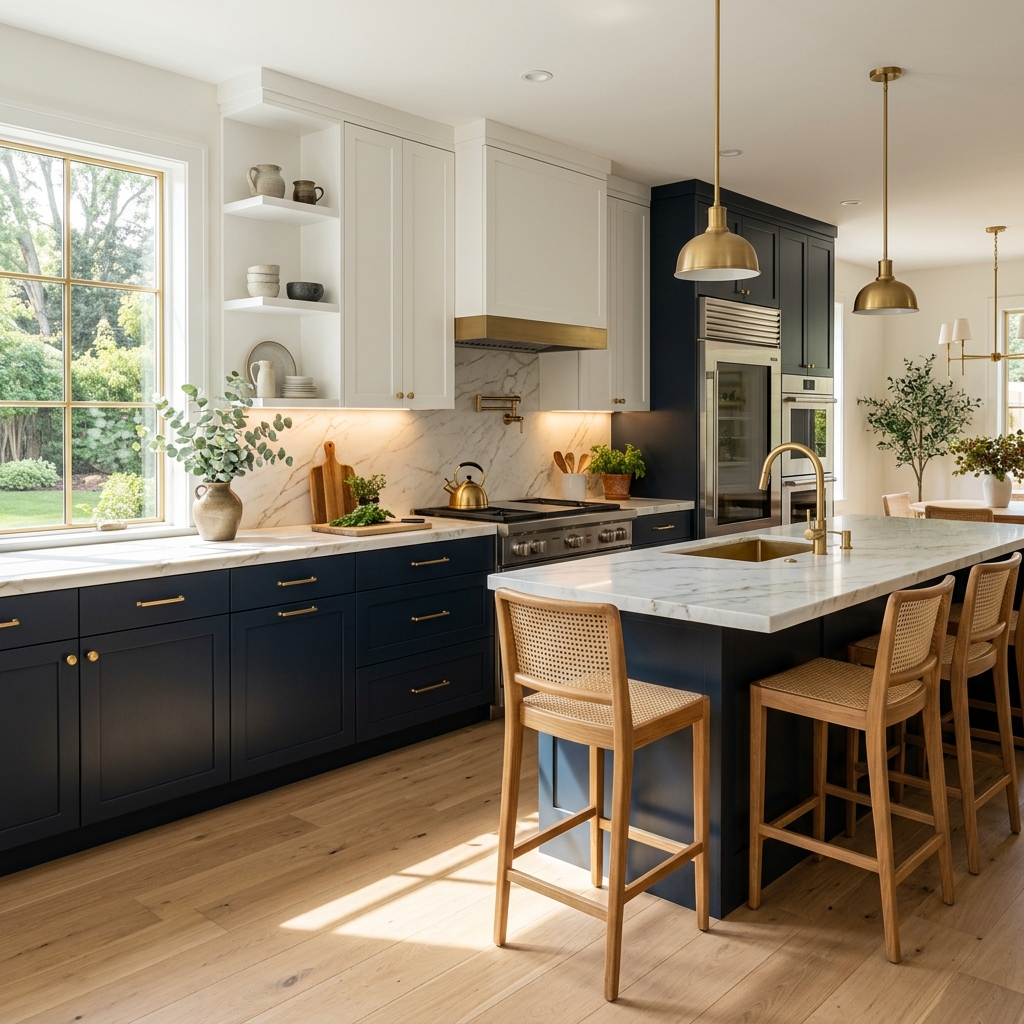
Google Ads (PPC) for Kitchen Remodeling Contractors: The Complete 2026 Guide
Google Ads is the single fastest way for kitchen remodeling contractors to get in front of homeowners who are actively looking to start a renovation. Here is the exact blueprint to capture these high-ticket leads.
7 min read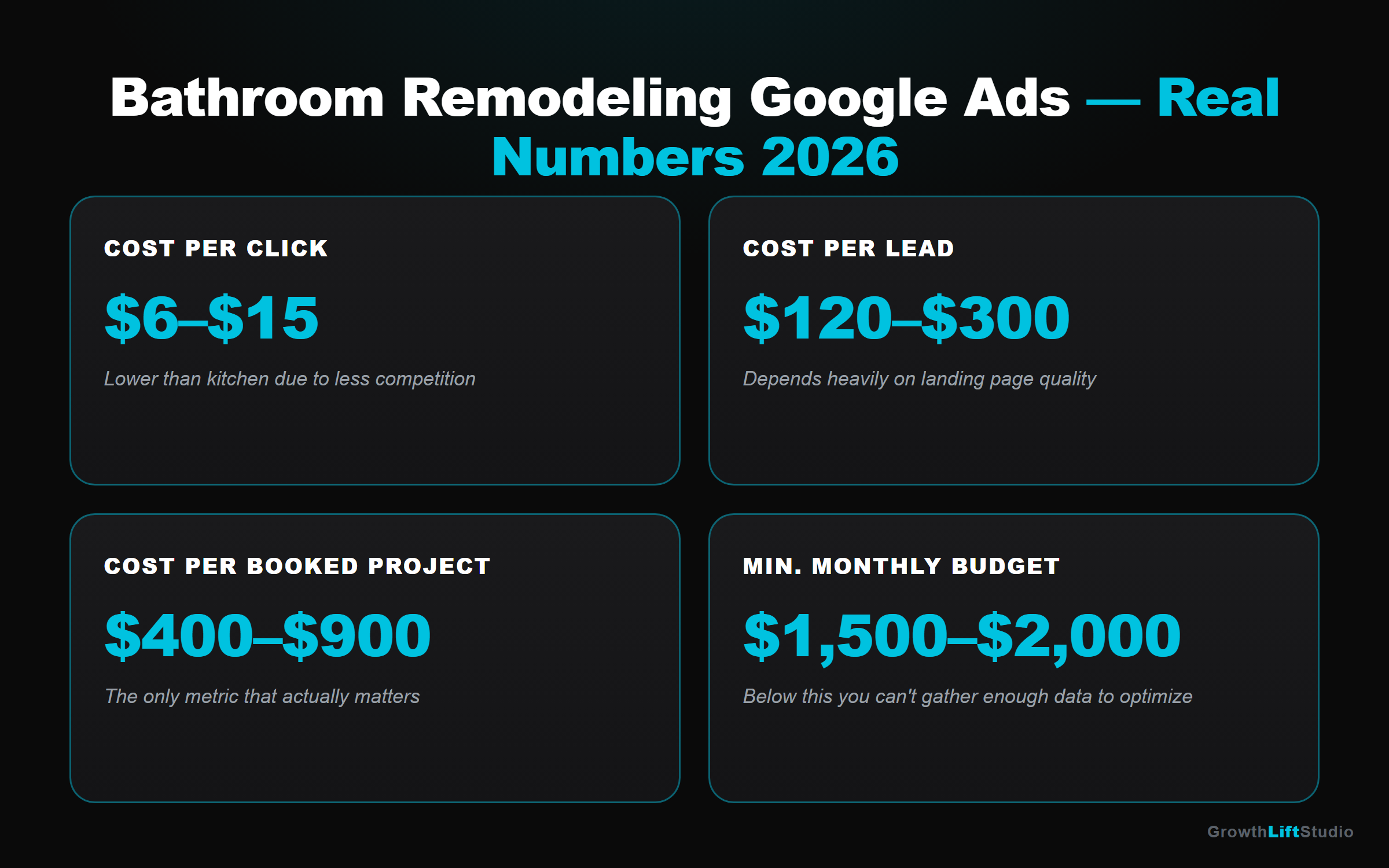
Google Ads for Bathroom Remodeling Contractors: The Complete Guide (2026)
Bathroom remodeling has tighter margins than kitchen work — which means your Google Ads campaign has zero room for wasted spend. Here's how to build one that actually books jobs.
10 min read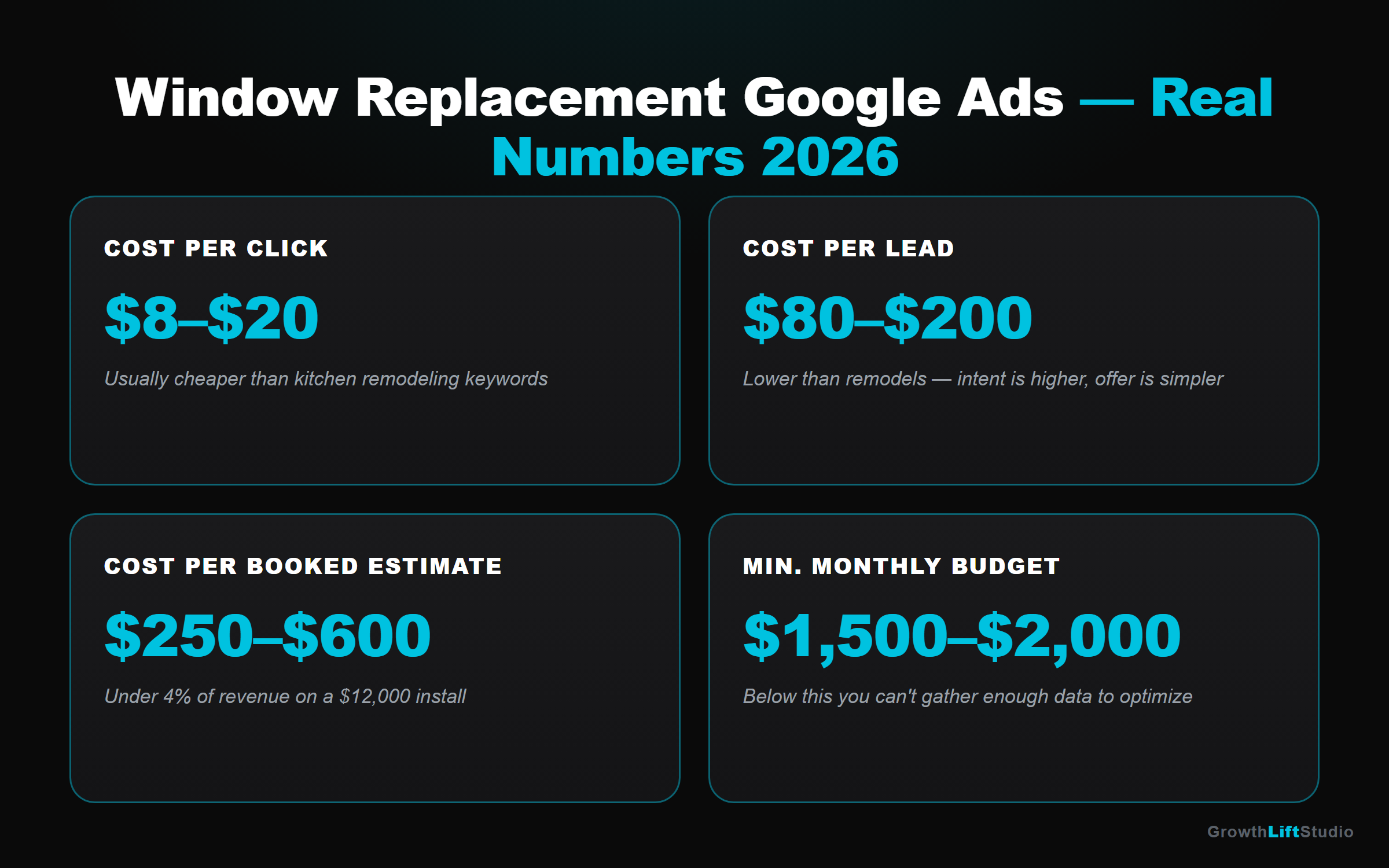
Google Ads for Window Replacement Contractors: How to Get High-Intent Leads
Window replacement is one of the most seasonal, highest-intent searches in home improvement. Here's how to build a Google Ads campaign that books installs instead of burning budget.
9 min readWant this system built for you?
First 5 qualified appointments free. You pay 1.5% only when you close a job.